

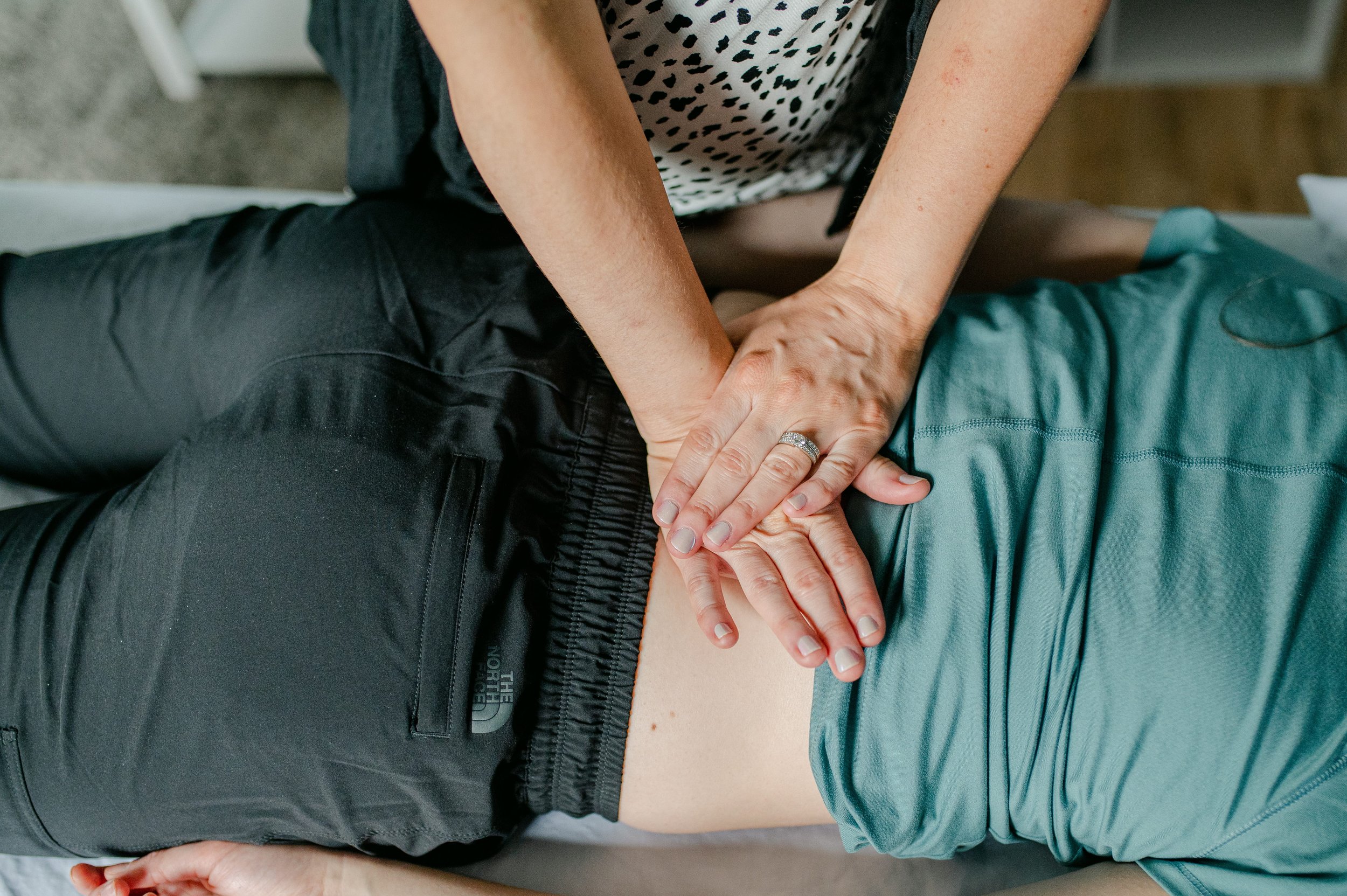
Low Back Pain Treatment For Women In Milwaukee
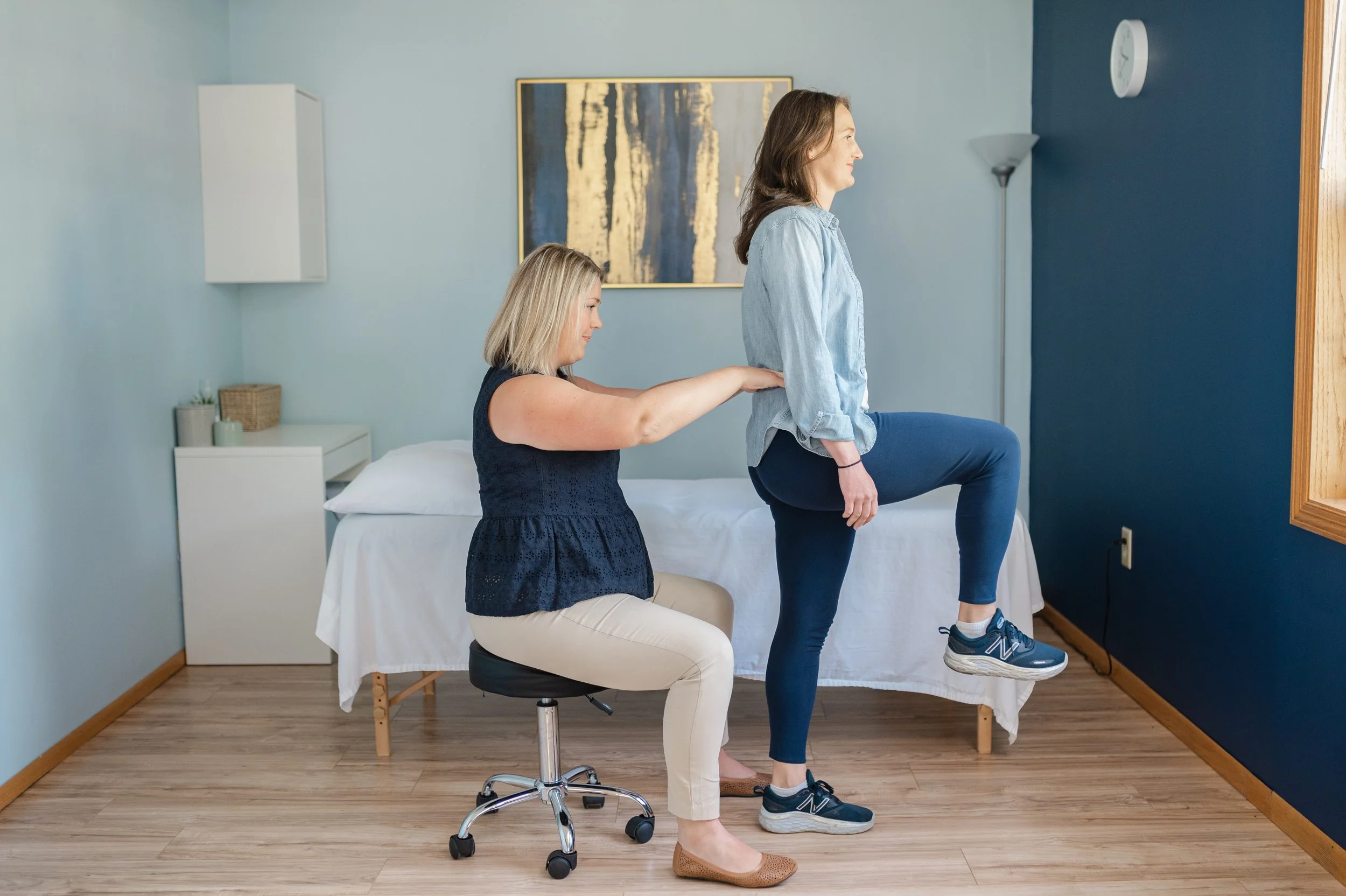
Most low back pain isn’t just a back problem. We help women uncover what’s really driving their pain so they can get back to workouts, keep up with their kids, and stop feeling limited by their body.
Does This Sound Like You?

Why This Happens
Low back pain can show up in many different ways including pain directly in the low back, tension through the hips, pain around the sacroiliac (SI) joints, or discomfort deep in the pelvis. While many people assume it’s simply a “back problem,” the source is often more complex than just an injured muscle or joint.
One of the most overlooked causes of low back pain are the pelvic floor muscles. Based on its direct connections to the pelvis, sacrum, tailbone, and core system, the pelvic floor can be a major contributor if there is any tightness, weakness, or poor coordination between the pelvic floor and core.
Impaired function of other whole-body systems such as nervous system dysregulation, poor sleep, gut health, and inflammation can also be drivers of pain and recovery. The coordination of these systems impact how well the body tolerates stress, heals tissue and manages pain.
Common Contributing Factors For Low Back Pain
Poor core, hip, and pelvic floor strength, stability or coordination
Overactive or tense core, back, or pelvic floor muscles creating compression and tension
Difficulty managing pressure through the abdomen and pelvis
Nervous system dysregulation and chronic tension patterns
Constipation and gut health dysfunction
Limited mobility through the hips, pelvis, ribcage, or spine
Reduced recovery, sleep, and overall tissue resilience
Returning to exercise or activity too quickly without proper muscular support
Because all of these systems influence each other, lasting relief often requires more than just stretching, exercises or temporary pain relief.
Our whole-body approach to low back pain treatment for women in the Milwaukee area looks at the full picture to help you move better, rebuild strength, reduce pain, and return to the activities you enjoy with more confidence.
Why Our Approach Is Different
Most women are dealing with multiple symptoms at once and trying to find the root cause. But the body doesn’t work in isolated parts so rarely is there one root cause. Instead, the body functions as connected systems, where everything influences everything else.
That’s why treating symptoms separately or seeing different providers for each issue, often leads to confusion, overlap, and incomplete results, leaving you to try to piece everything together on your own.
It ends up taking more time, energy, and mental bandwidth to figure out what’s actually going to work.
To create real, lasting change, you have to understand how everything is connected and address the biggest drivers first.
That’s exactly what we do with our approach.
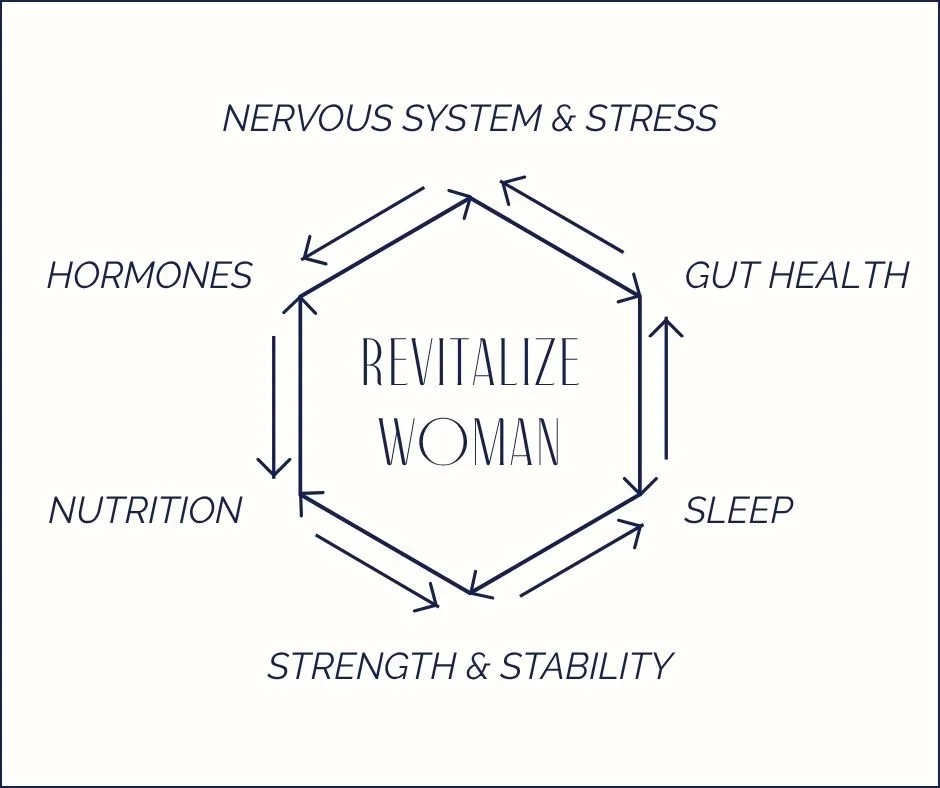
Find out which systems are impacting you by taking this quick, 2-minute women’s health assessment HERE.
Stop Guessing And Hoping This Just Gets Better
We’ll help you understand what’s actually causing your symptoms and give you a clear plan to move forward.
Real Results From Other Women
“Beyond impressed with the team at Revitalize! They helped me with my lower back pain and got me up and running with a fitness routine. I appreciate not only their expertise but the way they deliver care is next level! Highly recommend for your PT needs!”
-Taylor J.
Choose Your Next Steps
-

Improve your knowledge on back pain and why your pelvic floor may be the culprit.
-

Identify the top systems impacting your body and where to focus first with our quick, 2-minute assessment
-
Stop the guesswork and get clear answers with a personalized plan by starting with an evaluation.
Frequently Asked Questions About Low Back Pain Treatment
-
Yes,the pelvic floor has direct connections to the pelvis, sacrum, tailbone, and core system, which means dysfunction in the pelvic floor can contribute to low back, SI joint, hip, and pelvic pain. Tightness, weakness, poor coordination, or tension in the pelvic floor can all affect how the low back moves and stabilizes, not to mention, refer pain.
-
Recurring low back pain is often a sign that the root cause hasn’t fully been addressed. Many women temporarily feel better with rest, stretching, massage, or adjustments, but continue to experience flare-ups because issues like core weakness, pelvic floor dysfunction, nervous system stress, pressure management, movement patterns, recovery, or strength deficits are still contributing to the problem.
-
Absolutely. Chronic stress and nervous system overload can increase muscle tension, pain sensitivity, inflammation, and difficulty recovering from physical stress. Many women notice their low back pain worsens during periods of stress, poor sleep, overwhelm, or fatigue because the body is less resilient overall.
-
Yes, constipation, bloating, gut inflammation, and chronic straining can increase pressure and tension through the abdomen, pelvis, and pelvic floor system, which can contribute to low back and pelvic pain. Gut health and bowel function are often overlooked factors in persistent pain.
-
The low back, pelvis, hips, core, and pelvic floor all work together as part of the same support system. When one area is overloaded or not functioning well, nearby areas often compensate. This is why pain commonly shifts between the low back, hips, glutes, pelvis, and SI joints instead of staying in one exact location.
-
Yes, pregnancy and postpartum recovery can affect abdominal strength, pressure management, pelvic floor function, breathing mechanics, posture, and stability through the pelvis and spine. These changes can contribute to ongoing low back, SI joint, and pelvic pain if the body doesn’t fully regain support and coordination afterward. Having a diastasis recti can also exacerbate and contribute to low back pain.
-
Not necessarily. We recommend temporarily avoiding any exercises that make your pain worse but In many cases, movement and strength are important for recovery.
Oftentimes when you’re in pain, the body may not currently be tolerating certain movements, loads, or impact well. Part of treatment is helping improve stability, pressure management, coordination, and resilience so you can gradually return to exercise with more confidence and less pain.
-
Our whole-body approach looks at how the key systems in your body are working together to better understand what may be driving your pain. Treatment may include improving pelvic floor and core coordination, strength, movement patterns, nervous system regulation, gut health, recovery, and pressure management so you can achieve longer-lasting relief.
-
Yes. Revitalize Physical Therapy provides whole-body low back pain treatment in Milwaukee for women dealing with recurring back pain, SI joint pain, pelvic pain, postpartum pain, muscle tension, and difficulty staying active due to pain.